GRC isn't a department — it's a discipline
Most growing companies hear "GRC" and think it's something only Fortune 500 companies need. That's a mistake. GRC — governance, risk, and compliance — is simply the practice of making sure your organization knows what risks it faces, has policies in place to manage them, and can prove it to anyone who asks.
If you handle customer data, work with healthcare or financial clients, or want to land enterprise contracts, GRC is the discipline that gets you there.
What each letter actually means
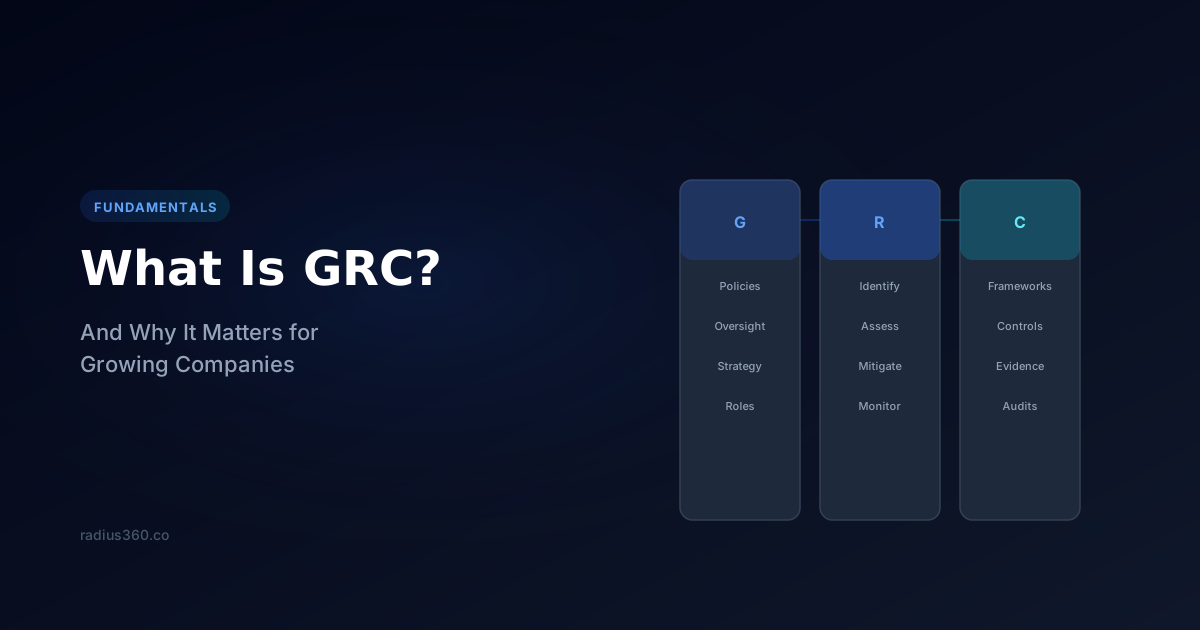
Governance is how your organization makes decisions about security. Who owns risk? Who approves policies? Who signs off on vendor relationships? Without governance, security decisions happen ad hoc — and that's how things fall through the cracks.
Risk management is the practice of identifying what could go wrong, how likely it is, and what you're doing about it. A risk register isn't a spreadsheet you fill out once a year — it's a living document that reflects your actual threat landscape.
Compliance is the evidence that you're doing what you say you're doing. Whether it's SOC 2, ISO 27001, HIPAA, or NIST, compliance frameworks give you a structured way to prove your security posture to auditors, customers, and partners.
Why it matters now
The days of "we'll deal with compliance when we need to" are over. Prospects ask for SOC 2 reports during sales cycles. Cyber insurance carriers want to see your risk register. Regulators are tightening requirements across every industry.
The companies that treat GRC as a foundation — not an afterthought — close deals faster, respond to incidents better, and spend less time scrambling before audits.
Getting started doesn't have to be painful
You don't need a 20-person compliance team to get started. Modern GRC platforms let a single security practitioner manage frameworks, track risks, generate policies, and collect evidence — all from one place. The key is starting with a single framework, building your risk register, and iterating from there. (If you're evaluating platforms, see our comparison of Drata, Vanta, and Radius360.)
See how Radius360 helps
Put these ideas into practice with the right tooling.
Explore Compliance Frameworks