SOC 2 is a marathon, not a sprint
The biggest mistake companies make with SOC 2 is treating it like a one-time project. They scramble for three months before an audit, pull evidence from everywhere, and hope it all holds together. Then they do it again next year.
SOC 2 works best when compliance is continuous — when evidence collects itself, policies stay current, and your controls are part of how you actually operate.
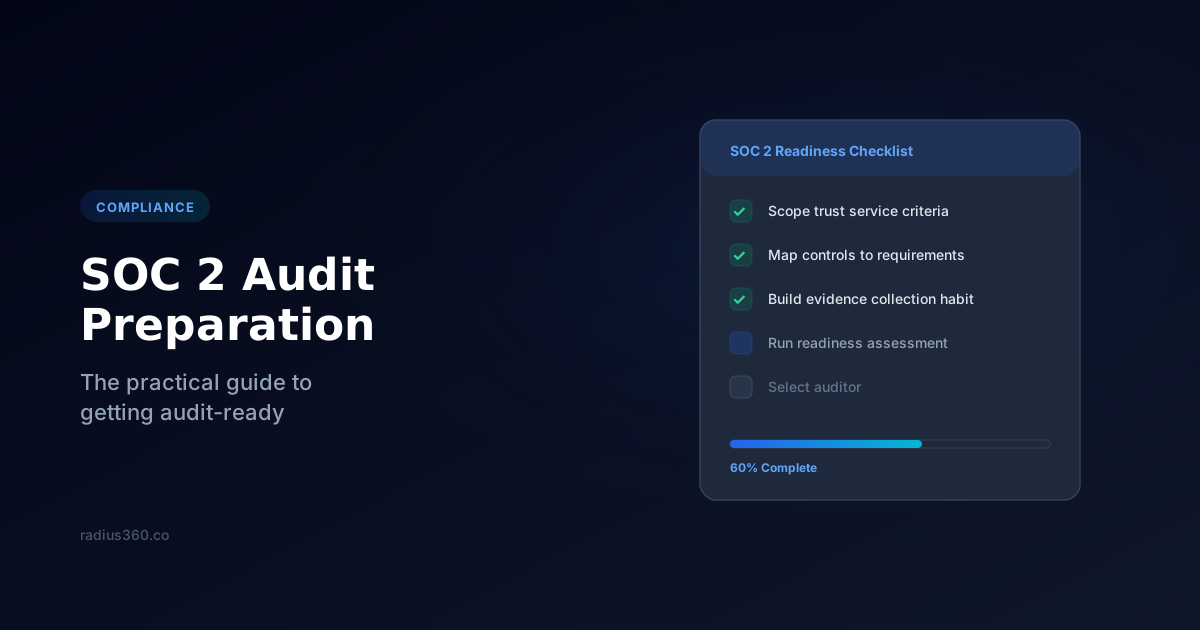
Step 1: Scope your trust service criteria
SOC 2 is built around five trust service criteria: Security, Availability, Processing Integrity, Confidentiality, and Privacy. Security is always in scope. The others depend on your business.
If you're a SaaS company, you probably need Security and Availability. If you handle PII, add Privacy. Don't over-scope — every additional criterion means more controls and more evidence to maintain.
Step 2: Map your controls
Controls are the specific things you do to meet each criterion. Access reviews, encryption policies, incident response procedures, vendor assessments — these are all controls.
The key is mapping controls to framework requirements so you know exactly what each control satisfies. If a single access review satisfies both SOC 2 CC6.1 and ISO 27001 A.9.2.5, you should only do it once — not twice.
Step 3: Build your evidence habit
Evidence is what proves your controls actually work. Screenshots, logs, policy acknowledgments, access review exports — auditors want to see that controls aren't just documented, they're executed.
The best approach is collecting evidence continuously. Every time you run an access review, export it. Every time a policy is acknowledged, log it. By the time the audit window opens, your evidence vault should already be full.
Step 4: Do a readiness assessment
Before your formal audit, run an internal assessment. Walk through every control, check for gaps, and fix them before your auditor finds them. A readiness assessment turns audit surprises into non-events.
Step 5: Pick the right auditor
Not all auditors are created equal. Look for a firm that specializes in your industry, communicates clearly, and doesn't nickel-and-dime you on every question. A good auditor is a partner, not an adversary.
If you need help with regulatory compliance or want a vCISO to guide your audit prep, experienced practitioners can cut your timeline significantly.
See how Radius360 helps
Put these ideas into practice with the right tooling.
See How Evidence Vault Works